Description
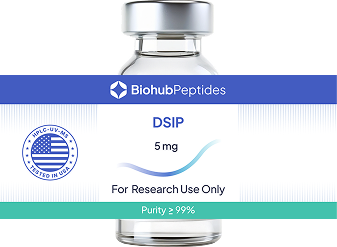
DSIP (Delta Sleep-Inducing Peptide) is a naturally occurring nonapeptide, first isolated from the cerebral venous blood of rabbits exhibiting delta wave sleep activity. It crosses the blood-brain barrier and interacts with hypothalamic neuroendocrine signaling, GABAergic tone, and monoamine oxidase activity in preclinical models. No confirmed receptor, gene, or precursor protein has been identified for DSIP. This makes its mechanism an active research question rather than a settled one, and shapes how specialty research peptide neuroendocrine studies around it are designed.
Chemical Information
- Chemical Name: DSIP (Delta Sleep-Inducing Peptide)
- Also Known As: DSIP nonapeptide
- Compound Class: Naturally occurring neuropeptide; sleep- and stress-axis modulator
- Sequence: Trp-Ala-Gly-Gly-Asp-Ala-Ser-Gly-Glu
- Molecular Formula: C35H48N10O15
- Molecular Weight: 848.8 g/mol
- CAS Number: 62568-57-4
Applications
- Sleep architecture and slow-wave sleep research. DSIP is used in animal models studying delta (slow-wave) sleep induction and sleep-stage transitions, building on its original isolation from cerebral venous blood during delta sleep states; its precise receptor target remains incompletely characterized in the literature
- HPA-axis and stress-response research. Published work has examined DSIP’s modulatory effects on ACTH and corticosteroid release and on stress-response behavior in animal models, positioning it as a research tool for studying peptide-mediated regulation of the stress axis independent of direct sleep effects
- Circadian and neuroendocrine signaling research. DSIP shows interactions with both sleep regulation and endocrine stress signaling. Therefore, researches use it in comparative study designs examining crosstalk between circadian neuropeptide systems and the HPA axis
- Comparative neuropeptide mechanism research. DSIP’s proposed mechanism (direct CNS neuromodulation) differs from receptor-mediated growth hormone secretagogues (e.g., GHRP-2, GHRP-6) and from the intranuclear DNA-interaction mechanism of Khavinson-series bioregulators (e.g., Epithalon, Pinealon). Researchers use this contrast to characterize distinct classes of sleep- and neuroendocrine-relevant peptides
- Note on evidence base: DSIP research spans several decades of animal and in vitro literature; its precise molecular target has not been definitively established, and results across studies have shown variability that researchers should account for in experimental design
Storage and Handling
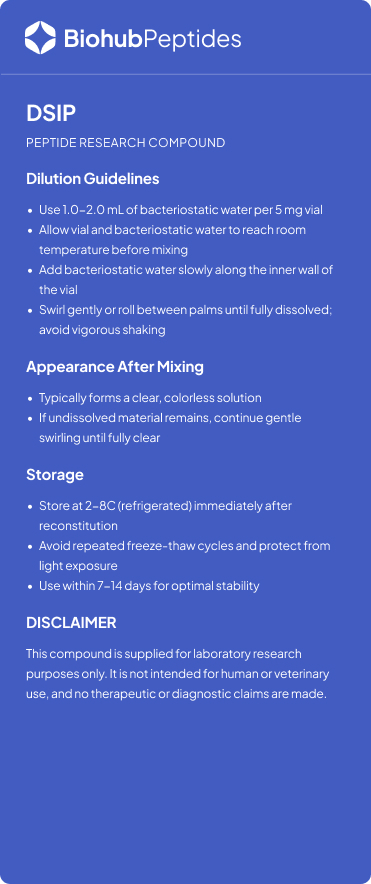
Store lyophilized powder at -20C for long-term stability, or at 2-8C for short-term use. Protect from heat, moisture, and direct light. Reconstitute with an appropriate aqueous buffer immediately before use. Store reconstituted solution at 2-8C and avoid repeated freeze-thaw cycles.
Compliance Notice
DSIP is for laboratory research use only. It is not for human or veterinary use and carries no therapeutic, diagnostic, or clinical indication. This product has not been evaluated by the FDA. By purchasing this product, the buyer confirms that they will follow appropriate institutional safety procedures and use it exclusively for controlled research.