
Description
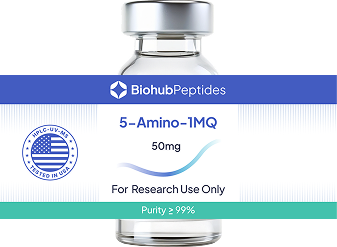
5-Amino-1MQ is a synthetic small-molecule inhibitor of nicotinamide N-methyltransferase (NNMT). A cytosolic enzyme that methylates nicotinamide using S-adenosyl-methionine (SAM) as a methyl donor, diverting both nicotinamide and SAM away from other metabolic processes in the process. Unlike the peptides, 5-Amino-1MQ is a membrane-permeable quinolinium compound that reaches its target intracellularly rather than binding a cell-surface receptor. Its pharmacology in adipocyte models was characterized in detail by Neelakantan et al. (Biochemical Pharmacology, 2018). Researchers studying the broader NAD+ salvage pathway and related mitochondrial signaling compounds can find additional context in the mitochondrial and cellular peptides research overview.
Chemical Information
- Chemical Name: 5-Amino-1-methylquinolinium (5-Amino-1MQ)
- Also Known As: 5-amino-1-methylquinolinium iodide; NNMT inhibitor; 5A1MQ
- Compound Class: Selective small-molecule NNMT (nicotinamide N-methyltransferase) inhibitor; positively charged quinolinium salt
- Molecular Formula: C10H10N2+ (cation); approximately C10H10N2I as iodide salt
- Molecular Weight: 158.2 g/mol (free cation); approximately 285 g/mol (iodide salt form)
- CAS Number: 65076-48-4
- Mechanism: Competitive inhibition of NNMT at the nicotinamide binding site; Ki approximately 3 micromolar in cell-free enzyme assays; cell-permeable due to positive charge facilitating uptake; inhibits NNMT-catalyzed transfer of methyl group from SAM (S-adenosylmethionine) to nicotinamide, reducing 1-methylnicotinamide (1-MNA) production and preserving SAM for other methylation reactions
Applications
- Selective NNMT inhibition studies. 5-Amino-1MQ competes with nicotinamide at the NNMT substrate binding site. NNMT catalyzes the methylation of nicotinamide using SAM as the methyl donor, producing 1-methylnicotinamide (1-MNA) and S-adenosylhomocysteine (SAH). Inhibiting this reaction reduces nicotinamide methylation, conserves SAM, and elevates intracellular nicotinamide available for re-entry into the NAD+ salvage pathway through NAMPT; the resulting NAD+ elevation is mechanistically distinct from direct NAD+ supplementation because it operates through reduced consumption rather than increased synthesis
- SAM conservation and one-carbon metabolism research. NNMT is the primary consumer of SAM in adipose tissue under obesogenic conditions. 5-Amino-1MQ reduces SAM consumption by NNMT, increasing SAM availability for competing methylation reactions including DNA methylation, histone methylation, and polyamine synthesis. Researchers studying how SAM availability affects epigenetic programming and metabolic gene expression use 5-Amino-1MQ to shift the cellular SAM economy without changing SAM biosynthesis
- SIRT1 activation research downstream of NAD+ elevation via NNMT inhibition. the NAD+ elevation resulting from NNMT inhibition increases SIRT1 deacylase activity (SIRT1 is NAD+-dependent and rate-limited by NAD+ availability); comparing SIRT1 activation by 5-Amino-1MQ (upstream NNMT inhibition → NAD+ elevation) versus direct NAMPT inhibition (FK866) or direct NAD+ supplementation isolates the salvage pathway contribution to SIRT1 regulation
- Adipose tissue metabolism research examining NNMT expression. NNMT is significantly overexpressed in adipose tissue under high-fat diet conditions. 5-Amino-1MQ in adipocyte cell models enables study of how NNMT activity level affects adipocyte lipid metabolism, mitochondrial biogenesis, and metabolic gene programs through the NAD+/SAM axis. The compound’s oral bioavailability makes it appropriate for in vivo adipose tissue studies
- Comparative NNMT inhibitor SAR research. 5-Amino-1MQ is the most extensively characterized NNMT inhibitor in the published literature; structural analogs (substituted quinolinium and isoquinolinium compounds) provide a defined SAR series for studying how N-methylquinolinium ring substitution affects NNMT binding affinity, cell permeability, and selectivity over other methyltransferase enzymes
Storage and Handling
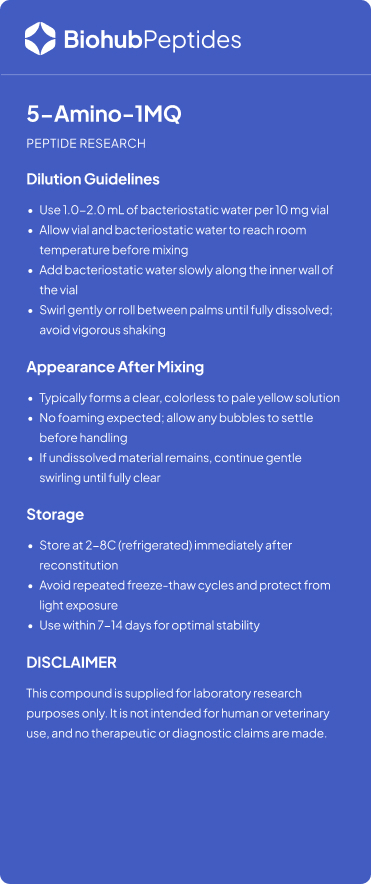
Store lyophilized solid at room temperature in a cool, dry place away from heat, moisture, and direct light. Keep container tightly sealed when not in use. Store reconstituted solutions at 2-8C and use promptly. Avoid repeated freeze-thaw cycles.
Compliance Notice
5-Amino-1MQ is for laboratory research use only. It is not intended for human or veterinary use and carries no therapeutic, diagnostic, or clinical indication. This product has not been evaluated by the FDA. By purchasing this product, the buyer confirms that it will use it exclusively for controlled research following appropriate institutional safety procedures.



