Description
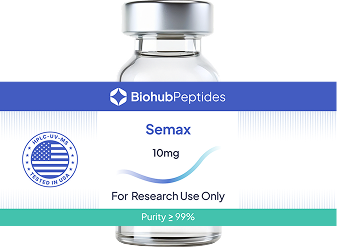
Semax is a synthetic ACTH analog derived from ACTH(4–10), studied in controlled laboratory environments for its interaction with BDNF-related signaling pathways, neuroplasticity-focused behavior, and neurotrophic activity within analytical neuroscience research models.
Chemical Information
- Chemical Name: Semax (Met-Glu-His-Phe-Pro-Gly-Pro; ACTH 4-10 heptapeptide analog)
- Also Known As: ACTH(4-10) analog; Semaks; Mexidol analog (different compound; not to be confused)
- Compound Class: Synthetic ACTH-derived heptapeptide; neurotrophic axis modulator
- Sequence: Met-Glu-His-Phe-Pro-Gly-Pro
- Molecular Formula: C37H51N9O10S
- Molecular Weight: 813.9 g/mol
- CAS Number: 80714-61-0
Applications
- BDNF/TrkB pathway activation studies in neuronal and glial cell models. Semax-driven BDNF upregulation provides a peptide-based tool for studying neurotrophic factor induction through a mechanism distinct from established BDNF inducers like exercise, antidepressants, and exogenous BDNF protein itself
- Melanocortin receptor interaction research examining ACTH(4-10) fragment pharmacology. Semax engages melanocortin receptors without ACTH’s adrenal-stimulating properties, making it useful for dissecting the receptor-level versus endocrine-level effects of melanocortin peptide biology
- Dopaminergic circuit research in models studying monoamine regulation. Gene expression studies using the Semax system have documented effects on D1, D2, and D3 receptor subunit mRNA, supporting its use in models where melanocortin-dopamine circuit interaction is the research question
- Neuroprotective signaling research under oxidative stress and ischemia conditions. Semax has been studied in rat stroke and hypoxia models with documented Egr1, Akt1, Src, and VEGFR2 gene upregulation, providing a research profile that overlaps with but is mechanistically distinct from BPC-157’s angiogenic pathway
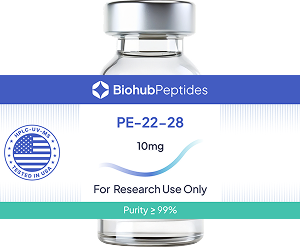
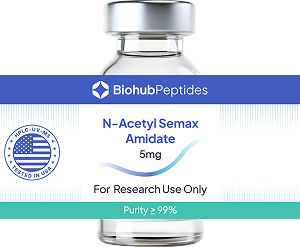
- Comparative research with N-Acetyl Semax Amidate and Adamax. The three compounds share the ACTH(4-10) core but differ in terminal modifications; using all three in parallel enables systematic study of how N-terminal acetylation, C-terminal amidation, and C-terminal adamantane conjugation affect TrkB pathway engagement duration and CNS distribution
Storage and Handling
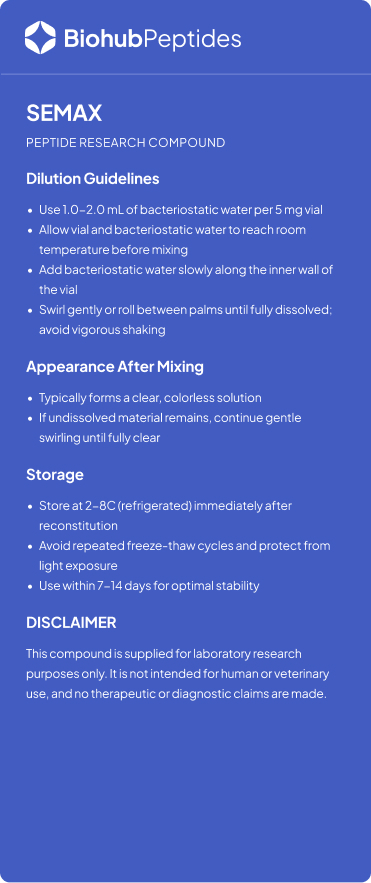
Store lyophilized powder at -20C for long-term stability, or at 2-8C for short-term use. Protect from heat, moisture, and direct light. The methionine residue in Semax’s sequence is susceptible to oxidation under suboptimal storage conditions; minimize oxygen exposure during handling. Reconstituted solutions should be stored at 2-8C and used promptly. Avoid repeated freeze-thaw cycles.
Compliance Notice
Semax is for laboratory research use only. They are not for human or veterinary use and carry no therapeutic, diagnostic, or clinical indication. FDA has not evaluated this product. By purchasing this product, the buyer confirms that they will follow appropriate institutional safety procedures and use it exclusively for controlled research.