
Description
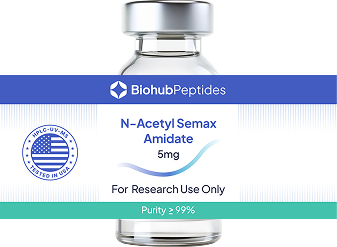
N-Acetyl Semax Amidate is a terminally modified analog of Semax — the ACTH(4-10)-derived heptapeptide studied for BDNF expression and neurotrophic signaling in CNS research models. The core Met-Glu-His-Phe-Pro-Gly-Pro sequence is preserved with N-terminal acetylation and C-terminal amidation added to protect both termini from exopeptidase-mediated degradation. The result is improved metabolic stability and persistence in biological systems — particularly relevant in brain tissue and nasal delivery contexts where unmodified Semax is susceptible to rapid proteolytic clearance. Researchers studying nootropic peptide neurotrophic signaling select this form when the experimental protocol requires longer compound persistence, or when direct comparison of modified vs unmodified Semax stability is itself the research variable.
Chemical Information
- Chemical Name: N-Acetyl Semax Amidate (N-acetylated, C-terminally amidated analog of Semax)
- Also Known As: Ac-Semax-NH2; acetylated Semax amide
- Compound Class: Modified synthetic heptapeptide analog; stability-enhanced derivative of Semax, an ACTH(4-10) fragment analog
- Sequence: N-acetyl-Met-Glu-His-Phe-Pro-Gly-Pro-amide (N-terminal acetylation and C-terminal amidation of the parent Semax sequence)
- Molecular Formula: Not established in public literature for the modified analog (parent Semax: C37H51N9O10S)
- Molecular Weight: Not established in public literature for the modified analog (parent Semax: 813.94 g/mol)
- CAS Number: Not established in public literature for the modified analog (parent Semax: 80714-61-0)
Applications
- Peptide stability and pharmacokinetic modification research. N-terminal acetylation and C-terminal amidation are standard modifications used to reduce degradation by aminopeptidases and carboxypeptidases; this analog is used in comparative research alongside unmodified Semax to study how these modifications affect proteolytic resistance and duration of biological activity
- Neurotrophic and cognitive signaling research. The modiresearchersg retains Semax’s core ACTH(4-10)-derived sequence. As such, researches study it within the same research framework as the parent compound
- Comparative structure-activity research alongside unmodified Semax. Researchers use N-Acetyl Semax Amidate and unmodified Semax side by side to assess whether terminal modification changes degradation kinetics or downstream signaling outcomes
Storage and Handling
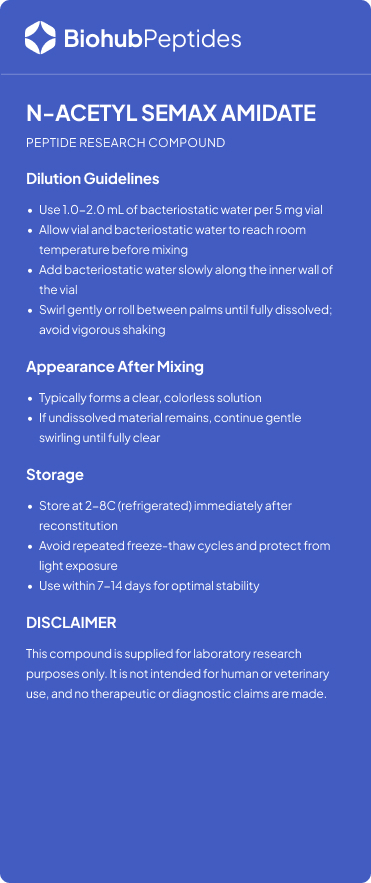
Store lyophilized powder at -20C for long-term stability, or at 2-8C for short-term use. Protect from heat, moisture, and direct light. Reconstitute with an appropriate aqueous buffer immediately before use; store reconstituted solution at 2-8C and avoid repeated freeze-thaw cycles.
Compliance Notice
N-Acetyl Semax Amidate is for laboratory research use only. It is not for human or veterinary use and carries no therapeutic, diagnostic, or clinical indication. FDA has not evaluated this product. By purchasing this product, the buyer confirms that they will follow appropriate institutional safety procedures and use it exclusively for controlled research.



